Support our work
Fund training, trauma kits and the local teams that keep response networks running long after we arrive.
Donate now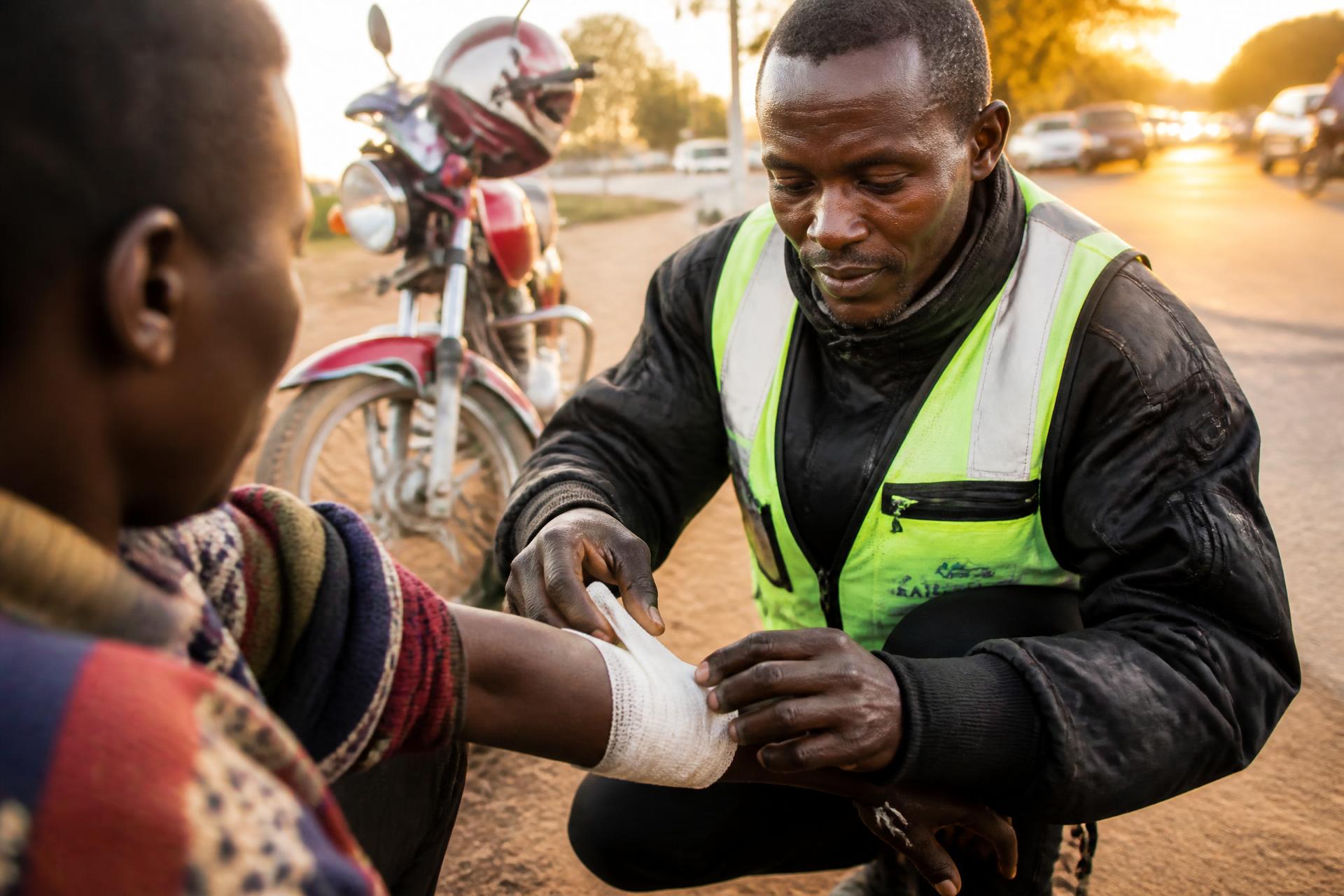
Community-based emergency care
LFR trains lay first responders to deliver emergency care where there is no ambulance.
There is no number to call and no ambulance on its way. But there is always someone nearby — a driver, a neighbour, a stranger who stops. Our work begins with the people who are already there.
Independently studied, government-partnered, and growing every year.
The LFR Model
Step 1
Every programme starts with ministries of health and local leaders.
Step 2
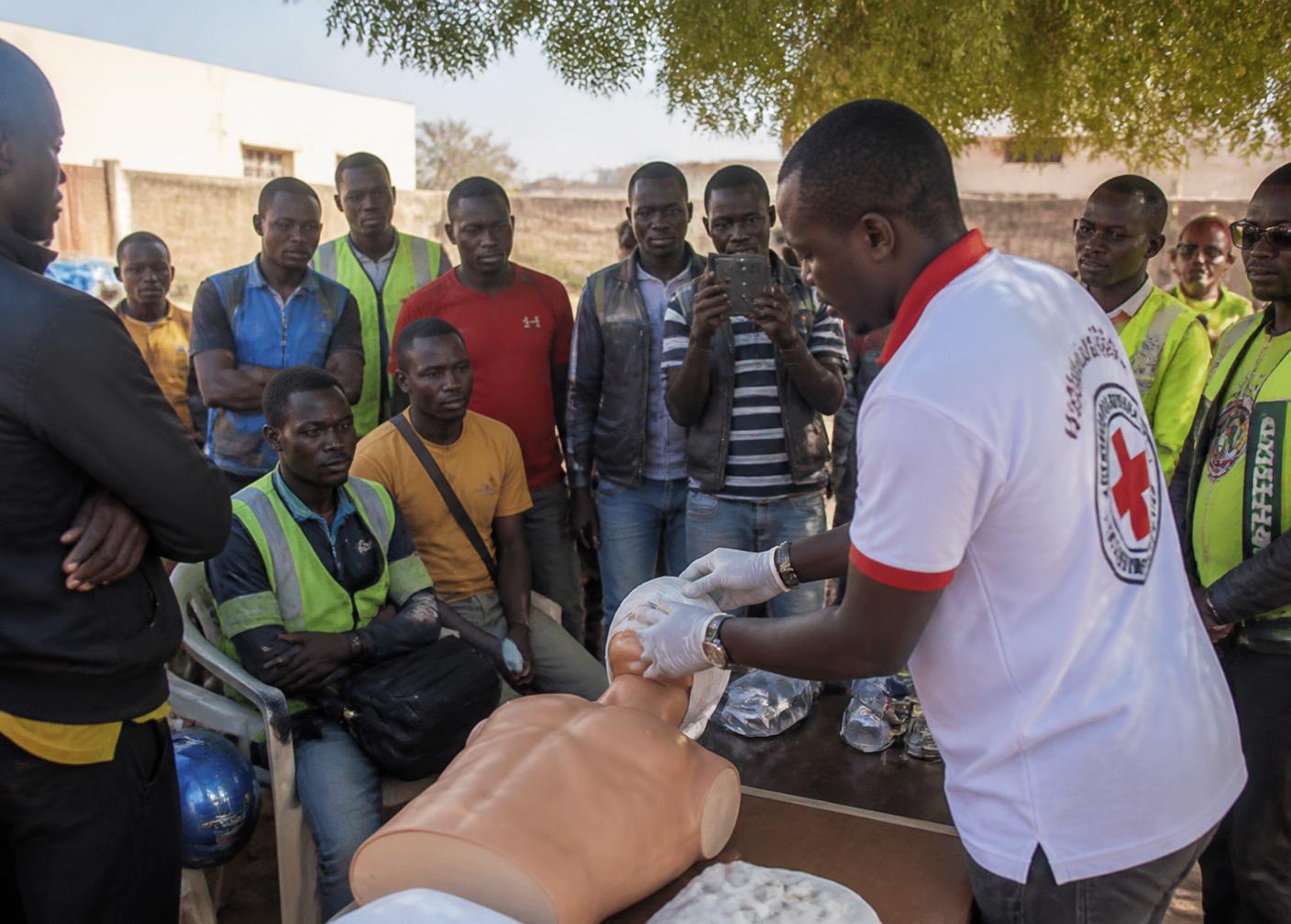
The people already on the roads become certified lay first responders.
Step 3
Trauma kits, dispatch support and refresher training where it counts.
Step 4
Locally owned, locally funded, designed to outlive our involvement.
A responder's story
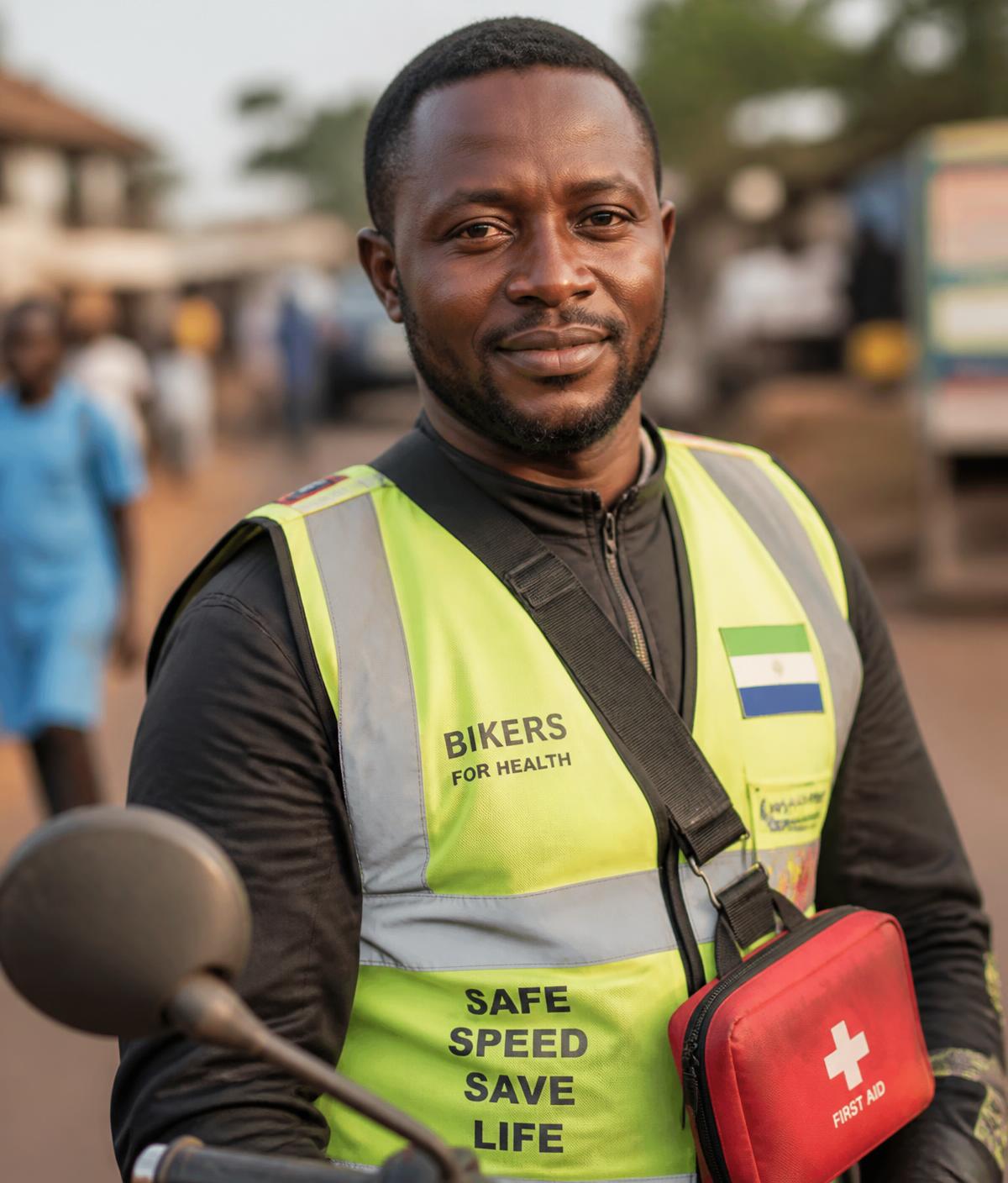
“I used to pass accidents and feel useless. Now I stop, and I know exactly what to do. Last month I carried a boy with a bleeding leg — I tied it off before we reached the hospital. He is walking today.”
Ibrahim K.
Okada driver and lay first responder, Makeni, Sierra Leone
Why it works
Our curriculum follows World Health Organization guidance for prehospital trauma care, and outcomes are published in peer-reviewed journals with academic partners. The model does not just save lives — it strengthens the livelihoods of the people delivering the care.
Research partners
Your gift trains and equips the people who arrive first. Monthly giving is what makes a local system sustainable.
Demonstration only — no payment is processed. Amounts are illustrative.
Where we work
Headquartered in Makeni, Sierra Leone, with programmes led by local teams and delivered alongside national health ministries.
Global HQ — Makeni, Sierra Leone
Fund training, trauma kits and the local teams that keep response networks running long after we arrive.
Donate nowWe work with governments, health ministries, universities and NGOs to design and scale national first-response systems.
Start a conversationGet updates from the field.
As featured in